
Compliance audits are becoming more common across industries, especially as cybersecurity threats and data regulations continue to evolve. For many business owners, the idea of an audit brings uncertainty. What are auditors actually looking for? And more importantly, how can you be confident your business is prepared?
The reality is that compliance is not just about passing an audit. It is about protecting your business, your data, and your customers. When approached correctly, preparing for a compliance audit becomes a structured, manageable process rather than a last-minute scramble. Below, we’ll break down what auditors evaluate, common mistakes businesses make, and how to prepare your organization with confidence.
What a Compliance Audit Really Evaluates
Security Controls and Data Protection
At its core, a compliance audit focuses on how well your business protects sensitive information. This includes customer data, financial records, employee information, and any industry-specific data your organization handles.
Auditors will look for:
- Secure systems and configurations
- Controlled access to sensitive data
- Proper use of encryption and safeguards
Strong security controls are not optional. They are the foundation of compliance and play a major role in preventing breaches and operational disruptions.
Policies, Documentation, and Procedures
One of the most overlooked areas of compliance is documentation. Even if your systems are secure, auditors expect to see clear, written policies that explain how your business manages data and responds to risks.
This may include:
- Written Information Security Programs (WISP)
- Access control policies
- Incident response plans
- Acceptable use policies
If it is not documented, it is difficult to prove compliance. This is why businesses often turn to structured IT support to ensure policies are both created and maintained properly. Netlogic’s approach to compliance and certifications emphasizes aligning documentation with real-world security practices, not just checking boxes.
Ongoing Monitoring and Risk Management
Compliance is not a one-time effort. Auditors want to see that your business is actively monitoring systems and managing risk on an ongoing basis.
This includes:
- Continuous system monitoring
- Regular risk assessments
- Timely updates and patch management
Without ongoing oversight, even well-configured systems can fall out of compliance over time. Proactive monitoring ensures your business stays aligned with evolving standards and threats.
Common Reasons Businesses Fail Compliance Audits
Missing or Incomplete Documentation
Many businesses fail audits not because of poor security, but because they lack proper documentation. Policies may be outdated, inconsistent, or missing entirely.
This creates gaps that auditors cannot ignore. Even strong technical systems need to be supported by clear documentation that shows how they are managed.
Lack of Proactive Security Measures
A reactive approach to IT is one of the biggest compliance risks. Waiting until something breaks or a threat appears is not enough.
Businesses without proactive systems often lack:
- Real-time monitoring
- Regular updates
- Preventative security controls
This increases the likelihood of vulnerabilities and makes it difficult to demonstrate compliance during an audit.
Poor Access and User Management
Another common issue is improper access control. Too many users with elevated permissions or unclear access policies can create significant risk.
Auditors often look for:
- Defined user roles
- Limited access to sensitive systems
- Tracking and accountability
Without structured access management, businesses expose themselves to both internal and external threats.
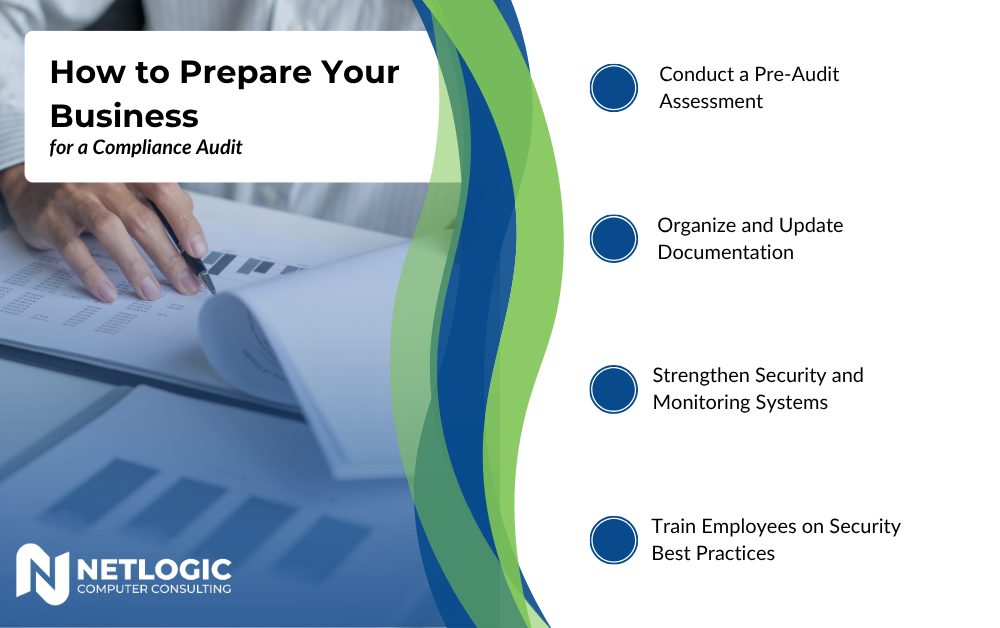
Steps to Prepare Your Business for a Compliance Audit
Conduct a Pre-Audit Assessment
The first step in preparing for an audit is understanding where your business currently stands. A pre-audit assessment identifies gaps in your systems, policies, and processes before an auditor does.
This allows you to:
- Address vulnerabilities early
- Prioritize improvements
- Reduce last-minute stress
Working with an experienced IT provider can help ensure this process is thorough and aligned with industry standards.
Organize and Update Documentation
Once gaps are identified, the next step is organizing and updating your documentation. This is often the most time-consuming part of compliance preparation, but it is critical.
Focus on:
- Security policies
- Incident response plans
- Employee training records
- System and access documentation
Having everything clearly documented not only helps with audits but also improves internal consistency and accountability.
Strengthen Security and Monitoring Systems
Your systems must support your compliance efforts. This includes ensuring all devices, networks, and software are properly configured and regularly updated.
A strong compliance-ready environment includes:
- Continuous monitoring
- Firewall and network protection
- Regular system updates
Businesses often rely on services like network and firewall support to maintain secure, stable infrastructure. These systems provide the visibility and protection needed to reduce risk and support compliance requirements.
Train Employees on Security Best Practices
Your employees play a major role in maintaining compliance. Even with strong systems in place, human error can create vulnerabilities.
Training should cover:
- Phishing awareness
- Password best practices
- Proper data handling
Regular training ensures your team understands their role in protecting the business and maintaining compliance standards.
How the Right IT Partner Simplifies Compliance
Access to Certified IT and Security Experts
Compliance requirements can be complex, especially as regulations continue to evolve. Working with an IT provider that holds relevant certifications ensures your business is guided by best practices.
Netlogic’s expertise in compliance frameworks and security standards helps businesses align their systems with real-world requirements rather than guessing what is needed.
Built-In Compliance and Cybersecurity Strategy
Compliance should not be treated as a one-time project. It should be part of your overall IT strategy. When cybersecurity and compliance are managed together, your business benefits from a more cohesive and effective approach.
This includes:
- Integrated security controls
- Ongoing monitoring
- Consistent policy management
Netlogic’s managed IT approach focuses on proactive support, helping businesses stay prepared rather than reacting under pressure.
Ongoing Monitoring and Audit Readiness
The most successful businesses are always audit-ready. Instead of scrambling before an audit, they maintain systems and documentation that are continuously aligned with compliance standards.
With ongoing monitoring and support, your business can:
- Reduce risk
- Improve operational stability
- Approach audits with confidence
This level of readiness turns compliance from a burden into a structured part of your operations.
Be Ready Before the Audit Happens
Preparing for a compliance audit does not have to be overwhelming. With the right systems, documentation, and support in place, your business can approach audits with confidence rather than uncertainty. The key is taking a proactive approach—identifying gaps early, maintaining strong security practices, and ensuring your policies and processes are always up to date.
If you are unsure where your business stands, now is the time to take action. Netlogic helps businesses build structured, compliance-ready environments through proactive IT management, security, and expert guidance. Contact Netlogic today to schedule a compliance assessment and ensure your business is prepared before the audit begins.


