
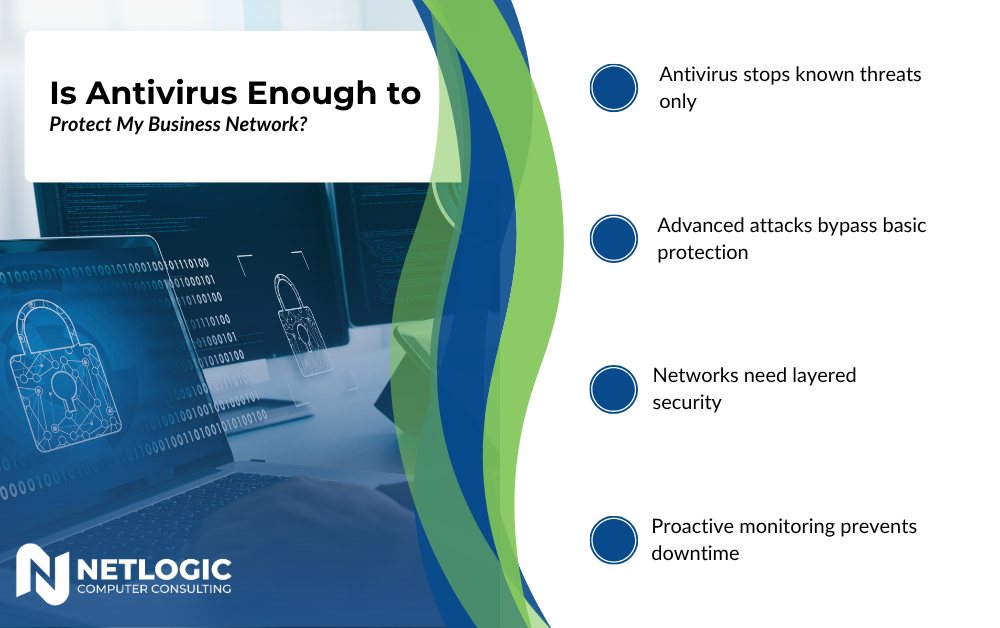
Many businesses assume that having antivirus software in place means they are protected from cyber threats. It’s a common belief, and for years, antivirus was considered the primary line of defense against attacks. But today’s threat landscape has changed significantly. Cybercriminals are using more advanced methods that go far beyond traditional viruses, and relying on antivirus alone leaves critical gaps in your protection.
The reality is that antivirus is just one piece of a much larger security strategy. While it still plays an important role, businesses need a more comprehensive approach to protect their systems, data, and operations. Understanding what antivirus does—and what it does not do—is the first step toward building a stronger, more secure network.
What Antivirus Software Actually Does
Detects Known Threats
Antivirus software is designed to detect and remove known threats such as viruses, malware, and certain types of spyware. It works by comparing files and programs against a database of known threat signatures.
When a match is found, the software can quarantine or remove the threat before it causes damage. This makes antivirus effective at stopping common and previously identified attacks.
Provides Basic Endpoint Protection
Antivirus typically operates at the device level, meaning it is installed on individual computers or servers. It scans files, downloads, and applications to identify potential risks.
This type of protection is valuable for preventing infections from everyday activities like downloading files or opening attachments. However, it focuses only on individual devices rather than the broader network.
Where Antivirus Is Still Valuable
Antivirus is still an important first layer of defense. It helps reduce exposure to common threats and provides a baseline level of protection.
But it is important to understand its role. Antivirus is not a complete security solution. It is one part of a layered approach that modern businesses need to stay protected.
Where Antivirus Falls Short for Businesses
Cannot Stop Advanced or New Threats
Modern cyber threats are constantly evolving. Many attacks today are designed to bypass traditional antivirus tools, especially those that rely on known threat signatures.
Examples include:
- Zero-day attacks
- Advanced ransomware
- Fileless malware
These threats do not always match known patterns, which means antivirus may not detect them in time.
Limited Visibility Across the Network
Antivirus operates at the endpoint level, which limits its visibility. It cannot monitor the full network, including servers, firewalls, or data traffic between systems.
Without broader visibility, businesses may miss early warning signs of an attack. This is why solutions like network and firewall support are critical. These services provide oversight of the entire network, not just individual devices, helping identify threats before they spread.
No Protection Against Human Error
One of the most common causes of security incidents is human error. Antivirus cannot prevent employees from clicking on phishing emails, using weak passwords, or unintentionally exposing sensitive data.
Businesses face risks such as:
- Phishing attacks
- Social engineering
- Credential theft
Without employee training and additional safeguards, these threats can bypass antivirus entirely.
What a Modern Business Actually Needs for Protection
Network Monitoring and Threat Detection
Modern cybersecurity requires visibility across your entire IT environment. Network monitoring tools track activity in real time, allowing businesses to detect unusual behavior before it becomes a serious problem.
This includes:
- Monitoring traffic patterns
- Identifying suspicious activity
- Detecting early signs of intrusion
By catching issues early, businesses can prevent disruptions and reduce the impact of potential threats.
Firewall and Network Security
Firewalls act as a barrier between your internal systems and external threats. They control incoming and outgoing traffic based on security rules, helping prevent unauthorized access.
A properly configured firewall is essential for:
- Blocking malicious traffic
- Protecting sensitive data
- Maintaining network integrity
Businesses that invest in professional network and firewall support benefit from stronger protection and more reliable performance across their systems.
Email Security and Employee Training
Since many attacks start with email, businesses must take steps to protect their users. Email security tools help filter out malicious messages, while training helps employees recognize potential threats.
Key areas include:
- Identifying phishing attempts
- Avoiding suspicious links and attachments
- Following secure data practices
A well-informed team is one of the most effective defenses against cyber threats.
Regular Updates and Patch Management
Outdated systems are a major vulnerability. Cybercriminals often exploit known weaknesses in software that has not been updated.
Regular updates and patch management ensure:
- Security vulnerabilities are addressed
- Systems remain stable
- Compliance requirements are met
Proactive maintenance plays a critical role in reducing risk and maintaining a secure environment.
How Managed IT and Cybersecurity Work Together
Proactive Monitoring and Response
Instead of waiting for issues to occur, a managed IT approach focuses on identifying and addressing problems early. Continuous monitoring allows IT teams to respond quickly to potential threats.
This reduces:
- Downtime
- Security incidents
- Operational disruptions
Netlogic’s approach to IT support emphasizes proactive management, helping businesses stay ahead of issues rather than reacting after the fact. You can learn more about their approach on their IT services page.
Layered Security Approach
Effective cybersecurity relies on multiple layers of protection working together. This includes antivirus, firewalls, monitoring tools, and user training.
A layered approach ensures that if one defense fails, others are in place to stop the threat. Relying on a single tool, like antivirus, creates unnecessary risk.
Ongoing Strategy and Compliance Alignment
Cybersecurity is not static. As threats evolve, so must your strategy. Businesses also need to consider compliance requirements related to data protection and security practices.
Working with an experienced IT provider helps ensure your systems remain aligned with industry standards and evolving regulations. Netlogic’s expertise in compliance and certifications helps businesses maintain both security and regulatory readiness.
Antivirus Is Only the Beginning
Antivirus software remains an important part of your security strategy, but it is not enough on its own. Today’s cyber threats are more advanced, more targeted, and more difficult to detect with basic tools alone.
Businesses need a layered, proactive approach that includes network monitoring, firewall protection, employee training, and ongoing system management. By moving beyond a reactive mindset, you can reduce risk, improve stability, and better protect your operations.
If your business is relying solely on antivirus, it may be time to take a closer look at your overall security strategy. Contact Netlogic to schedule a cybersecurity assessment and build a stronger, more comprehensive approach to protecting your business network.


