
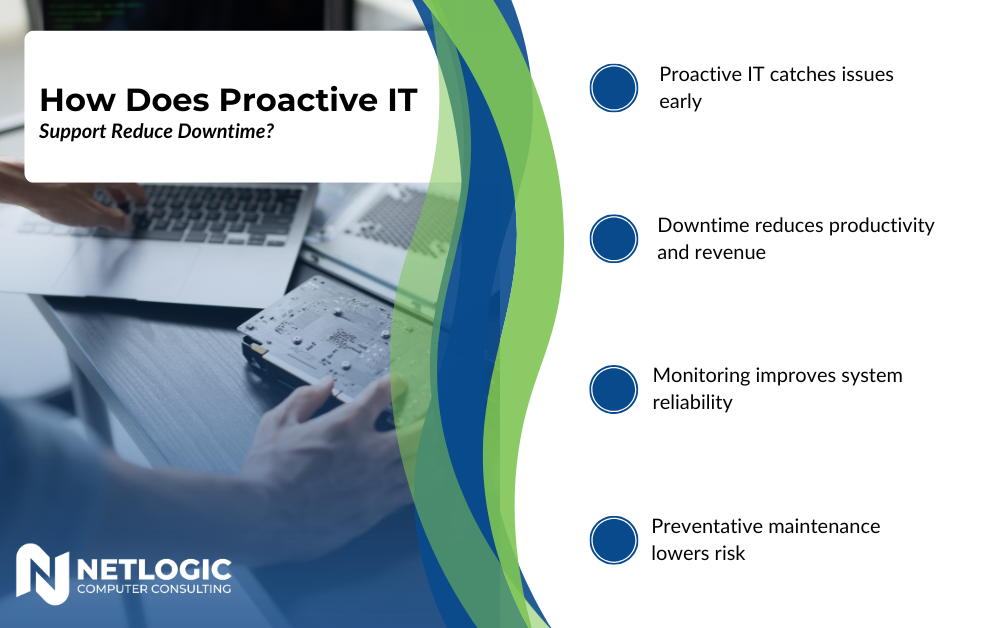
Downtime can impact nearly every part of a business. When systems go offline, employees lose access to critical tools, communication slows down, and productivity suffers. In many cases, businesses only respond to IT issues after something breaks, creating a cycle of repeated disruptions and unexpected costs.
This reactive approach may solve immediate problems, but it does little to prevent future ones. Proactive IT support takes a different approach by identifying and addressing issues before they cause major interruptions. Instead of constantly reacting to outages, businesses can maintain more stable systems, stronger security, and better operational efficiency.
What Proactive IT Support Actually Means
Monitoring Systems Before Problems Occur
Proactive IT support focuses on continuous monitoring of servers, networks, devices, and critical business systems. Instead of waiting for employees to report problems, monitoring tools track system performance in real time and identify unusual activity early.
This allows IT teams to detect:
- Slow network performance
- Hardware failures
- Storage capacity issues
- Unusual system behavior
By identifying these warning signs early, businesses can resolve issues before they affect daily operations.
Businesses that rely on stable infrastructure often benefit from services like network and firewall support, which help maintain visibility and security across the network.
Preventative Maintenance and Updates
Outdated software and aging hardware are common causes of downtime. Proactive IT support includes routine maintenance, software updates, patch management, and hardware evaluations to keep systems operating efficiently.
Instead of waiting for systems to fail unexpectedly, preventative maintenance helps reduce:
- Security vulnerabilities
- Performance problems
- Unplanned outages
Keeping systems updated is also critical for businesses with compliance or cybersecurity requirements.
Ongoing IT Strategy Instead of Emergency Fixes
One of the biggest differences between proactive and reactive IT support is long-term planning. Reactive support focuses only on solving immediate problems, while proactive support aligns technology with the future needs of the business.
This includes:
- Planning for growth
- Improving infrastructure
- Reducing recurring issues
- Supporting long-term operational stability
Netlogic’s managed IT services are designed to help businesses move away from emergency-based IT management and toward a more strategic approach.
The Real Cost of Business Downtime
Lost Productivity Across the Organization
When systems are unavailable, employees often cannot complete their work efficiently. Whether it is email access, cloud applications, file servers, or communication tools, downtime quickly affects productivity across multiple departments.
Even short interruptions can lead to:
- Delayed workflows
- Missed deadlines
- Reduced efficiency
For growing businesses, these disruptions become increasingly expensive over time.
Revenue and Operational Disruptions
Downtime does not only affect internal operations. It can directly impact customers, vendors, and overall business performance.
Potential consequences include:
- Delayed services
- Missed customer communication
- Interrupted sales processes
- Lost business opportunities
For industries like manufacturing, healthcare, or financial services, downtime can create even greater operational and compliance concerns.
Increased Stress on Internal Teams
A reactive IT environment creates constant pressure on employees and leadership teams. Instead of focusing on strategic growth, businesses spend time dealing with recurring technical problems and urgent issues.
This creates:
- Frustration among employees
- Reduced confidence in systems
- More time spent troubleshooting instead of working
Proactive support reduces these disruptions by creating a more stable and predictable IT environment.
How Proactive IT Support Helps Prevent Downtime
Early Detection of Performance Issues
Many outages begin as smaller performance problems that worsen over time. Proactive monitoring helps identify these issues early, allowing businesses to take corrective action before systems fail completely.
This may include:
- Slow servers
- Network congestion
- Storage limitations
- Hardware performance declines
Addressing these issues early helps prevent larger operational disruptions.
Faster Response to Emerging Problems
When monitoring systems are in place, IT teams can often respond to issues before employees even notice them. Alerts provide immediate visibility into system problems, allowing faster troubleshooting and remediation.
This significantly reduces:
- Downtime duration
- Productivity loss
- Business disruption
Instead of waiting for systems to fail completely, businesses can resolve problems while operations continue running smoothly.
Stronger Cybersecurity Protection
Cybersecurity threats are one of the leading causes of downtime today. Ransomware, phishing attacks, and unauthorized access can all disrupt operations and create major financial losses.
Proactive IT support helps strengthen cybersecurity through:
- Continuous monitoring
- Threat detection
- Security updates
- Access management
Businesses that combine proactive IT support with cybersecurity planning are better positioned to reduce risk and maintain operational continuity. Netlogic’s focus on compliance and cybersecurity support helps businesses maintain both security and regulatory readiness.
More Reliable Backup and Recovery Systems
Even with strong preventative measures, issues can still occur. Reliable backup and recovery systems ensure businesses can restore operations quickly if data loss or outages happen.
A proactive approach includes:
- Routine backup verification
- Recovery planning
- Testing backup systems regularly
Without these safeguards, recovery after an outage can become slow, expensive, and disruptive.
Why Businesses Are Moving Away From Reactive IT
Predictable IT Management
Businesses are increasingly moving toward proactive support because it creates more predictable operations. Instead of constant emergencies and unexpected downtime, businesses gain a more stable IT environment with fewer surprises.
This allows leadership teams to focus more on growth and less on technical disruptions.
Improved Long-Term Efficiency
Over time, proactive IT support improves efficiency by reducing recurring issues and creating stronger infrastructure. Employees spend less time dealing with technical problems and more time focusing on productive work.
Technology becomes a tool that supports growth rather than a recurring obstacle.
Access to a Dedicated IT Partner
A proactive IT provider does more than solve technical issues. They become a strategic partner that helps guide technology decisions, improve security, and support long-term business goals.
This includes:
- Ongoing recommendations
- Infrastructure planning
- Security improvements
- Operational support
Working with an experienced IT partner gives businesses access to expertise that would otherwise require a large internal IT team.
Reduce Downtime With a Proactive IT Strategy
Downtime is expensive, disruptive, and often preventable. Businesses that rely on reactive IT support frequently experience recurring issues, operational interruptions, and increased security risks. Proactive IT support changes that approach by identifying problems early, improving system reliability, and reducing the likelihood of major outages.
With continuous monitoring, preventative maintenance, and long-term IT planning, businesses can create a more stable and secure technology environment. Netlogic helps businesses reduce downtime through proactive managed IT services designed to support operational efficiency and long-term growth.
If your business is tired of reacting to recurring IT problems, now is the time to take a proactive approach. Contact Netlogic today to learn how proactive IT support can improve reliability, strengthen security, and keep your business running smoothly.


